Why Active Adults Over 50 Are Quietly Switching to At-Home Knee Massagers

Published July 2026 · 6 min read

In twenty years as a physical therapist, I've watched the same quiet story play out over and over. A patient in their fifties or sixties — still active, still busy — starts to notice their knees. First it's the stairs. Then getting up off the couch. Then a little hesitation before a walk they used to take without a second thought.
None of them are "old." They're gardeners, weekend hikers, nurses, grandparents who want to get down on the floor and back up again. What they have in common is a joint that's stiff, under-supported, and cranky by the end of the day — and a growing list of half-measures that don't quite cut it.
Why the usual fixes fall short
Here's what I tell people. A knee sleeve gives you a little compression and warmth, but it's passive — it just sits there. A gel or a pill masks the ache for a few hours without doing anything for the stiffness underneath. And a proper clinic session — heat, massage, movement — genuinely helps, but who can get to a clinic several times a week, indefinitely?
What actually loosens a cranky knee is a combination: gentle warmth to relax the tissue, rhythmic compression to encourage circulation, and massage to release the muscles and tendons around the joint. In the clinic we do all three. The problem was always doing it at home, consistently, without turning it into a project.
What changed
Over the last couple of years, a new category of at-home device has quietly closed that gap — cordless wraps that deliver heat, air compression and vibration massage together, in one 15-minute session you can run on the couch. One that keeps coming up with my own patients is a wrap called PivotKnee™.
Instead of a thin strap, it wraps the whole joint. Air chambers gently squeeze and release around the knee; an even layer of warmth loosens the stiffness; and adjustable vibration works the surrounding muscles. It's essentially the three things I'd do by hand, bundled into something you press one button to start.
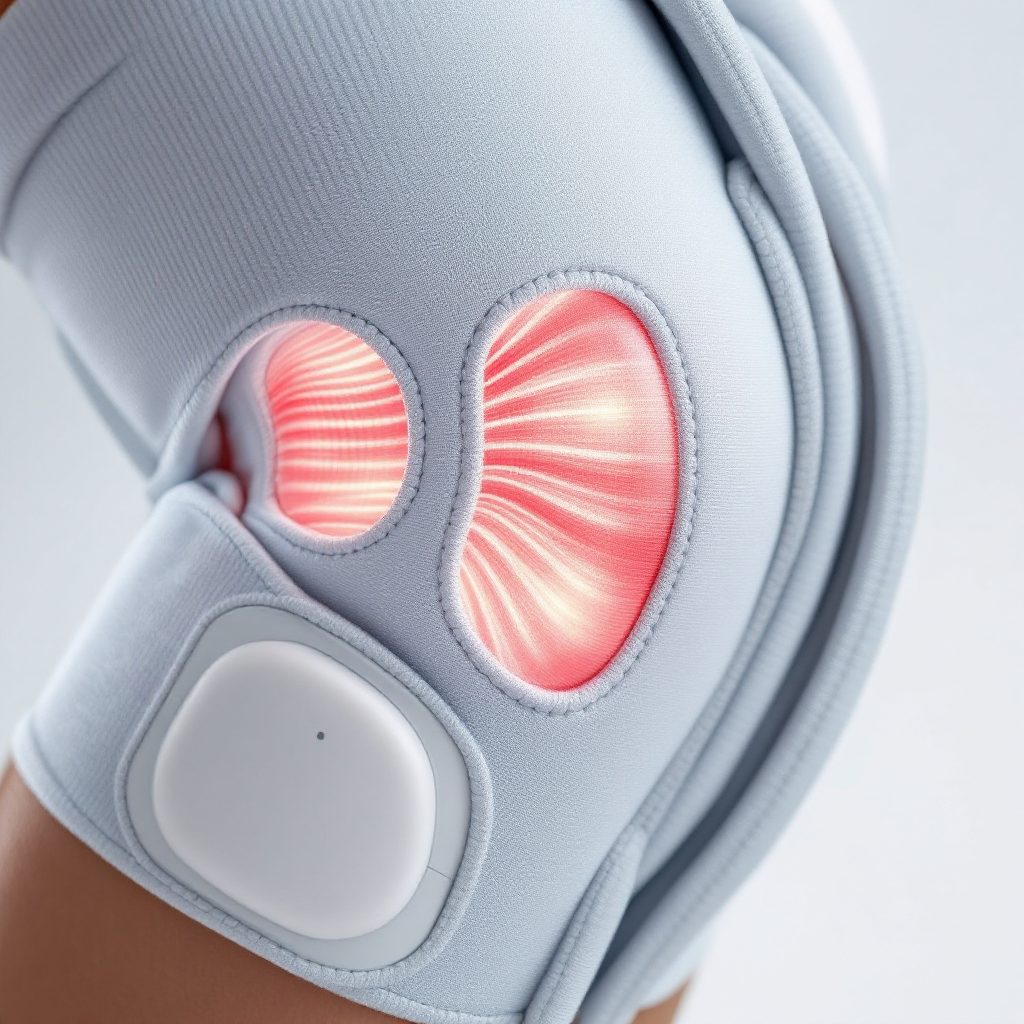
Rhythmic squeeze-and-release around the joint that supports circulation and eases the "tight" feeling.
Even, adjustable warmth that loosens a stiff, cold knee the way a good heat pack does.
Multiple intensities that relax the muscles and tendons that support the knee.
Who tends to get the most out of it
- Active 50+ adults who feel it on the stairs and after sitting
- Walkers, hikers and weekend athletes using it for recovery
- People on their feet all day — nurses, teachers, retail, trades
- Anyone tired of bulky braces, short-lived gels or leaning on pills
My honest take
I want to be clear about what this is and isn't. It's not a cure, and it's not a substitute for seeing a professional if you have a diagnosed problem — a device can't rebuild cartilage or fix a structural issue. What it can do is what heat, compression and massage have always done: help a stiff, tired joint feel looser and more comfortable, and make it easier to keep moving. For a lot of people, "easier to keep moving" is the whole ballgame — because movement is what keeps the knee healthy in the first place.
The people I see do best aren't chasing a miracle. They're the ones who use it consistently — fifteen minutes in the evening, or right after a walk — and quietly get their stairs, their gardening and their morning loop back.
"The stairs had become my enemy. Fifteen minutes in the evening and my knee feels looser the next morning."
"After long shifts my knees throbbed. The heat plus the squeezing is the best part of my night now."
"My recovery tool after every tennis match. Warms it up and works out the stiffness."
A few sensible cautions
Warmth, compression and massage aren't for everyone. If you have a pacemaker or another implanted device, a history of blood clots or a clotting disorder, or you're pregnant, check with your doctor first. Don't use it over broken skin, and stop if anything hurts. Used sensibly, though, it's about the lowest-effort way I know to give a cranky knee a little daily care.
Check Availability & Claim the Discount →